
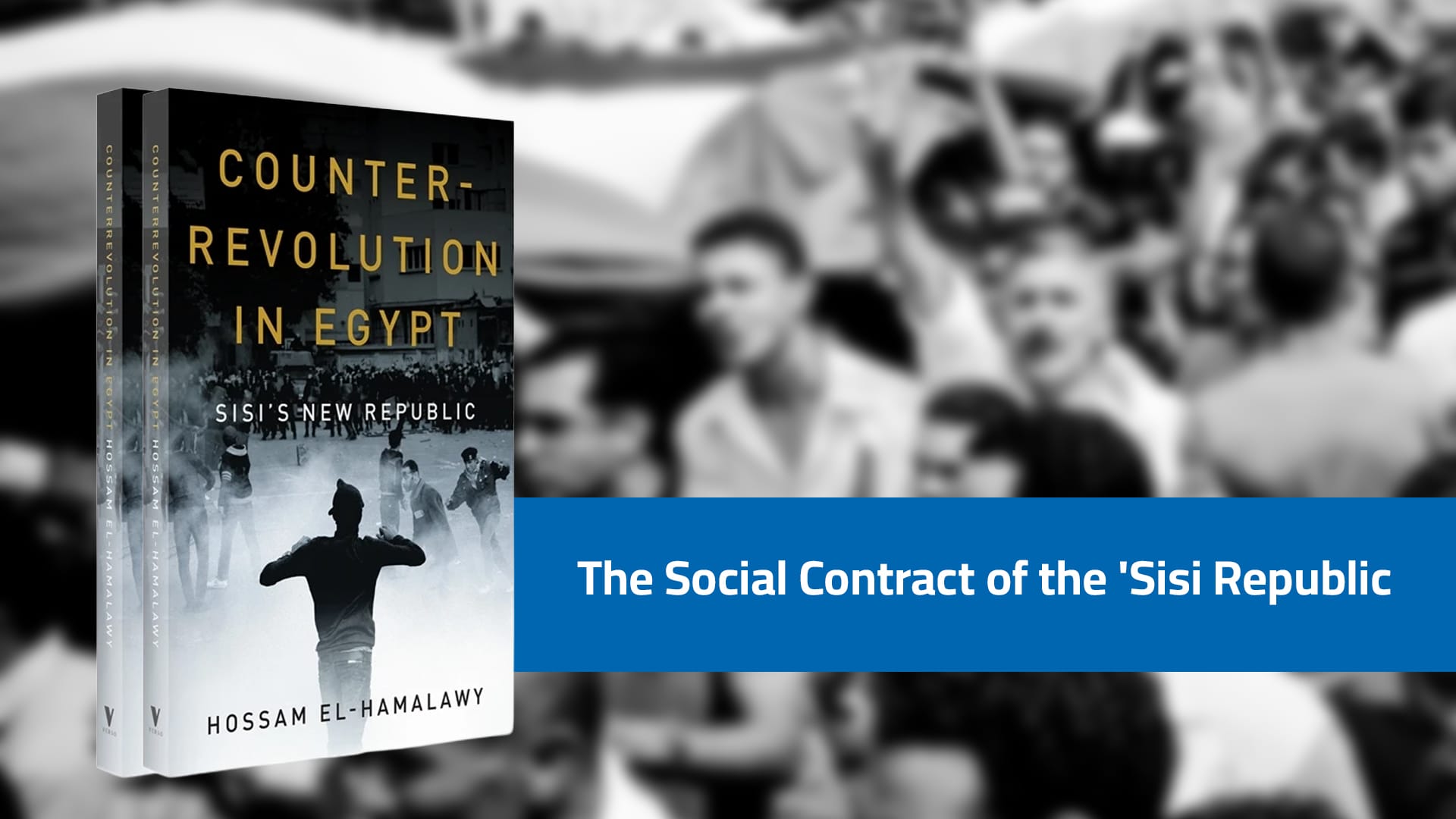
"The Social Contract of the 'Sisi Republic': A Reading of Hossam el-Hamalawy's Book 'Egypt's Counter-Revolution
On the night of October 8, 2000, Hossam el-Hamalawy was driving to meet the poet Ahmed Fouad Negm when two unidentified cars blocked his way. Armed men in civilian clothes emerged, pounced on him, dragged him from his car, and threw him into one of theirs. Blindfolded with his Palestinian keffiyeh, Hossam—then 23 years old—found himself at the State Security headquarters in Lazoghly. He would spend four days there under interrogation, punctuated by shifts of beatings, stripping, and threats of rape, while sharing a cramped cell with a group of detainees associated with the “jihadist” current. His captors apparently thought them ideal companions for a communist troublemaker. Yet things inside the cell did not unfold as State Security officers might have wished. It later emerged that none of those detainees belonged to any armed organization, and they shared their meager food with their Marxist cellmate, making room for him on the crowded cell floor.
A quarter of a century after that incident, el-Hamalawy has produced, in English, what is perhaps the most detailed published account of the security apparatus that arrested him that night: its history, its political economy, its political entanglements, and the tally of its victims. His recently published book, Counter-Revolution in Egypt: Sisi’s New Republic, began life as a doctoral dissertation at the Free University of Berlin, supervised by political scientist Cilja Harders and historian Khaled Fahmy. Yet despite the academic character of its argument, the book is also a personal story—one that can readily be generalized to encompass the stories of many Egyptians.
At first glance, the reader might expect the balance between these two modes to break down somewhere along the book’s logical architecture, its narrative wavering between a deeply researched academic documentation of the Egyptian regime and the testimony of a witness who has burdened his account with more footnotes than it ought to bear. Yet I think this is among the most successful works published in answering a question that scholars of Egypt have spent the past decade trying to resolve: why did the Egyptian regime become more violent, ferocious, and totalizing after the 2013 coup—to a degree unseen in Egypt’s modern history since 1952, and perhaps even before it?
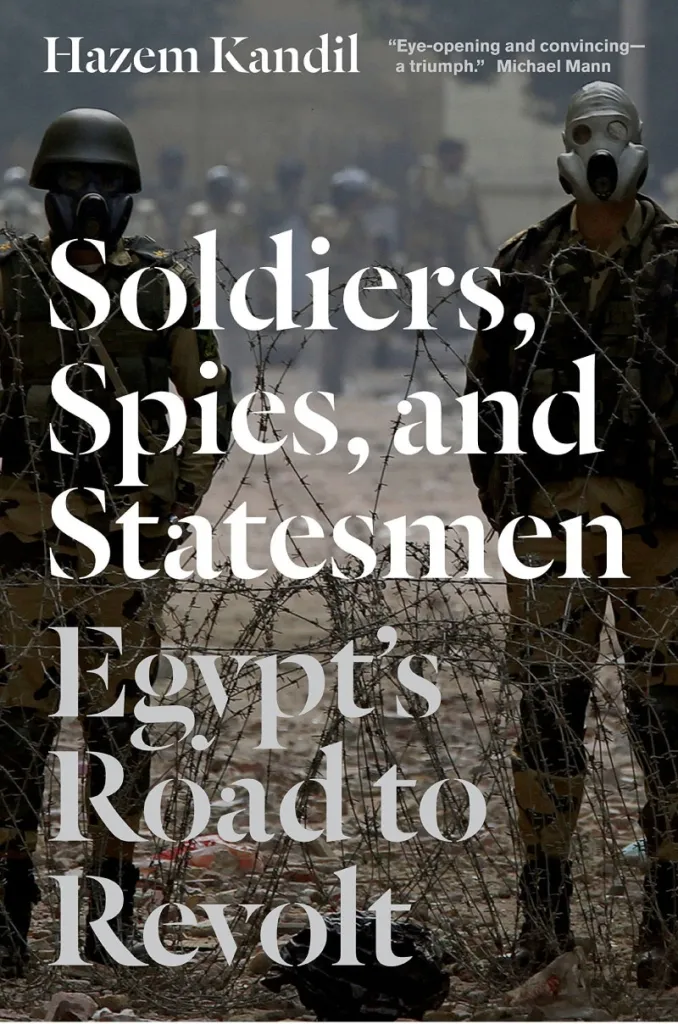
Hazem Kandil argued in his influential Soldiers, Spies and Statesmen (2012)—which offers a useful point of comparison here—that the military first displayed reluctance and then turned against Mubarak in February 2011 because the armed forces had seen their influence shrink relative to the security apparatus and intelligence services. Mubarak, in Kandil’s account, had deliberately intensified competition among these institutions in order to divide influence between them, thereby reducing the generals’ once-absolute weight in decision-making circles. Kandil also argued that the generals felt institutionally aggrieved within the regime, constrained in their economic activity and social standing, and burdened by a repressed frustration with the peace treaty that prevented confrontation with Israel.
El-Hamalawy disputes most of Kandil’s thesis and devotes a lengthy chapter to making the case against it. Drawing on leaked U.S. diplomatic cables, memoirs by retired military commanders, and a number of secondary documents that have rarely been examined with sufficient care, he concludes that Egypt’s military leadership was never marginalized, that its senior officers lived comfortably, and that the 1979 peace treaty with Israel was not a source of frustration for them. On the contrary, el-Hamalawy argues, after 2013 the military voluntarily ceded the islands of Tiran and Sanafir to Saudi Arabia, permitted the Israel Defense Forces to conduct airstrikes inside Sinai, and stood powerless before restrictions on the entry of aid shipments into Gaza during the most recent genocidal war. All of this, he suggests, renders Kandil’s narrative somewhat confused.
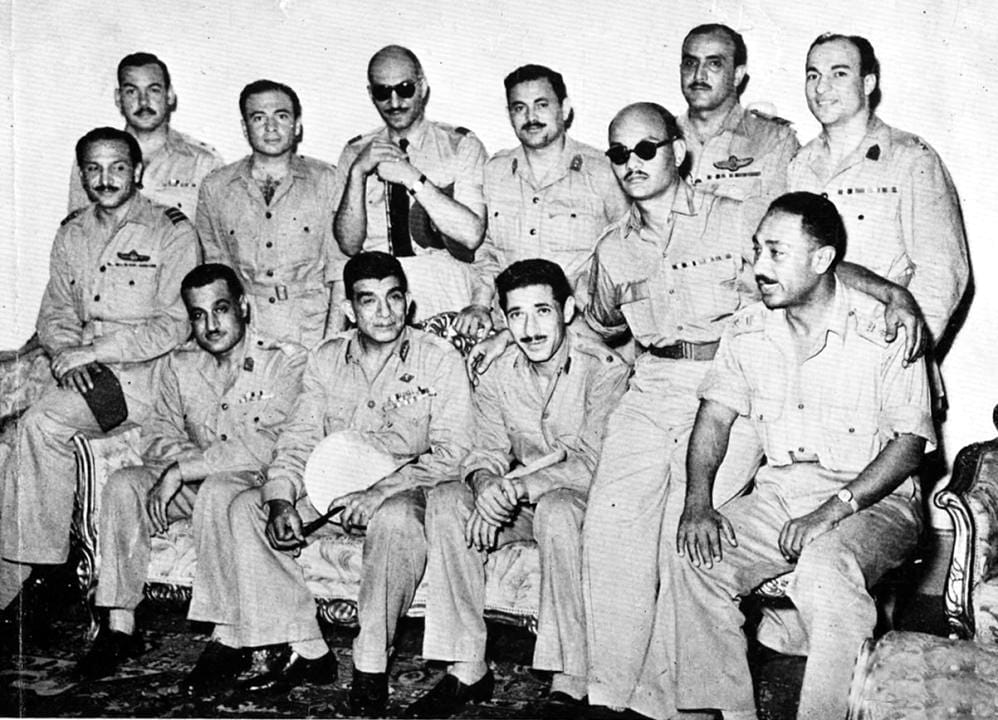
El-Hamalawy’s central argument is that, after seizing power in Egypt in 1952, the Free Officers established a coercive, coup-proofing system inherited from the British occupation and modified with certain improvements. The loyalty of the security forces passed smoothly from the colonial power to the new national rulers, without any fundamental change in their security doctrine. Alongside them stood a General Intelligence Service directly connected to the president, as well as a military establishment with its own Military Intelligence apparatus. These three security bodies were deliberately granted overlapping powers, so that none could monopolize coercive power and thereby threaten the presidency without being watched by another. Zakaria Mohieddin, Nasser’s intelligence chief, is credited with designing this intricate web of security institutions. In practical terms, it succeeded in preventing any military coup from taking power throughout the history of the republic. But it also kept the various security agencies in a state of permanent, mutual, subdued suspicion: they were never all equally violent at the same time.
After 1973, Sadat greatly expanded the police in both manpower and equipment, driven by a well-founded suspicion of the victorious army’s commanders. Mubarak continued and broadened the same policy. Under him, the Central Security Forces grew substantially. In an interview with el-Hamalawy, a retired brigadier described them, in his own words, as “the slaves of the Interior Ministry.” Their paramilitary formations relied on rank-and-file recruits drawn from poor, illiterate young men, deliberately selected for their extreme naïveté and lack of education. It was these recruits who mutinied in February 1986 after a rumor spread through their camps that their period of conscription would be extended. They attacked tourist facilities and public buildings in Giza before the army intervened to suppress the uprising. El-Hamalawy recounts the testimony of a former police officer who told him that the army saw the crisis as an opportunity to settle accumulated scores with the Interior Ministry, firing on policemen whom it had ostensibly arrived to rescue from the mutinous conscripts.
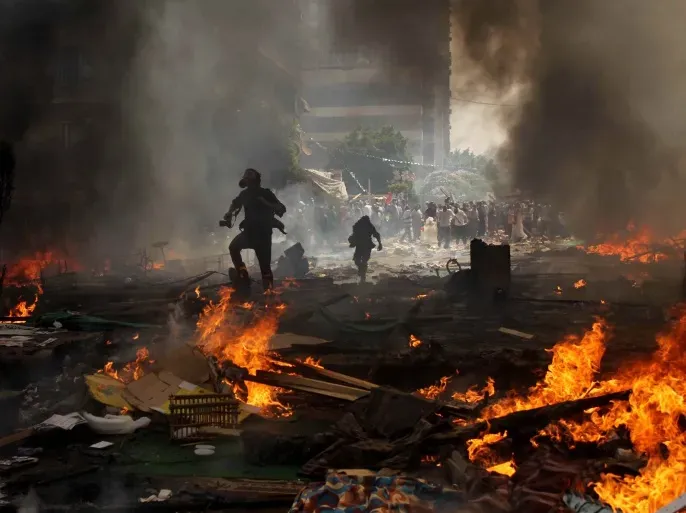
El-Hamalawy then describes the Mubarak-era period when Zaki Badr served as interior minister—the 1990s, an age marked by extreme security brutality in the confrontation with militant Islamist groups. El-Hamalawy lived through those years as a young man and recalls feeling that the country was under occupation. Even so, he regards August 14, 2013—the day security forces killed at least 817 people in Rabaa al-Adawiya Square and another 87 in al-Nahda Square—as the cornerstone of the new regime. For the first time since 1952, he argues, all security institutions were placed under a unified command coordinating field operations, surveillance, and detention facilities in a way that had previously been structurally impossible. El-Hamalawy calls that moment, in his words, “a social contract in the founding of the Second Republic.” The new regime, in his account, does not base its legitimacy on any claim to prosperity or stability of the old kind established under Mubarak. Instead, it rests on the naked demonstration of its ability to kill and repress on a mass scale, without accountability or punishment, in a manner unprecedented in Egypt’s modern history.
Citing Khaled Fahmy, el-Hamalawy argues that we are not dealing with a “state within a state,” the common description used by an older generation of observers of Egyptian public affairs to characterize the military fiefdom since the era of Abdel Hakim Amer. Nor is it even a “state above the state,” as some contemporary observers describe it. Rather, it is a parallel sovereignty: self-sufficient, equipped with its own economic, legal, and media institutions, and governing the country in a manner closer to that of an occupying power. I found this a provocative and potentially far-reaching proposition.
The book’s greatest strength lies in the sheer scale of its source base. El-Hamalawy managed to obtain memoirs and testimonies from numerous forgotten police and intelligence commanders and officers, materials that only a tiny minority of scholars of Egyptian military sociology have examined. He cross-references these first-hand sources with leaked WikiLeaks cables and documents, reviews reports by numerous independent international organizations and investigative journalism platforms, and undertook the considerable labor of conducting interviews over several years with retired officers, exiled political and human-rights activists, fugitive Muslim Brotherhood leaders, and his comrades in the Revolutionary Socialists, the political group to which he has belonged since 1998.
In one chapter, el-Hamalawy reconstructs the biographies of the senior military leadership, tracing the career of each officer from his graduating class at military college, through postings to different armed formations and battlefields in the Yemen War, the War of Attrition, and the 1973 War; identifying which officers served beneath him; then following appointments as military attachés in Egyptian embassies abroad; and finally noting who retired or joined the boards of public-sector companies after leaving service. The chapter amounts to a prosopographical study of the Egyptian military establishment and its interlocking relationships, in something close to the method associated with historian Lewis Namier, who approached politics through the reconstruction of networks of personal relationships rather than institutional definitions. This is not merely a formal embellishment. The declared motivations of political actors have genuine analytical value. Through them, el-Hamalawy is able to substantiate the concept of “vertical cleavages,” borrowed from political scientist Hicham Bou Nassif, to explain the military establishment’s behavior between 2011 and 2013 more clearly than the notion of a unified body of “institutional grievances” against Mubarak.
El-Hamalawy’s use of statistical data is particularly evident, and he treats it as one of the principal tools for anchoring his narrative. Comparing documented figures is itself an argument against an Egyptian regime that has withheld poverty data since 2020. Since Sisi assumed power in 2014, long-term external debt rose from $41.7 billion to $152.9 billion in 2024. The Egyptian pound lost roughly 462 percent of its value following successive devaluations beginning in 2016, while food-price inflation reached 72 percent by 2024. These and other striking economic figures convey the scale of deterioration in economic and living conditions. But el-Hamalawy points to another remarkable statistic: the number of Egyptians officially registered as residing abroad rose from six million in 2013 to fourteen million in 2024—an increase approaching threefold. The author considers this, as do I, a form of silent referendum whose ballots no one in Cairo has bothered to count.
El-Hamalawy supplements these figures with data from Egyptian courts. Between 2013 and 2018, around 2,443 death sentences were issued, compared with 152 between 2011 and 2013, according to the London-based legal organization Reprieve. Although none of these figures and statistics will be entirely new to readers who closely follow Egyptian affairs—similar numbers have appeared piecemeal in outlets such as Mada Masr and the Tahrir Institute—the labor of collecting, documenting, and comparing them within a single volume makes a considerable difference.
The book’s fifth chapter, “An Ideal Military Camp,” offers a coherent portrait of state domination in the Foucauldian sense, and is one of the relatively rare places where the author turns from documentation to theorization, embellishing the chapter with striking details. Newly appointed civilian government employees, for example, are now required to undergo a six-month training course at the Egyptian Military Academy, wearing military uniform and being instructed in patriotic principles designed to counter ideas hostile to the state. There are also smaller details that speak volumes about a harsh and banal bureaucracy: applicants to such positions may be excluded for being overweight, while pregnant women may also be disqualified.
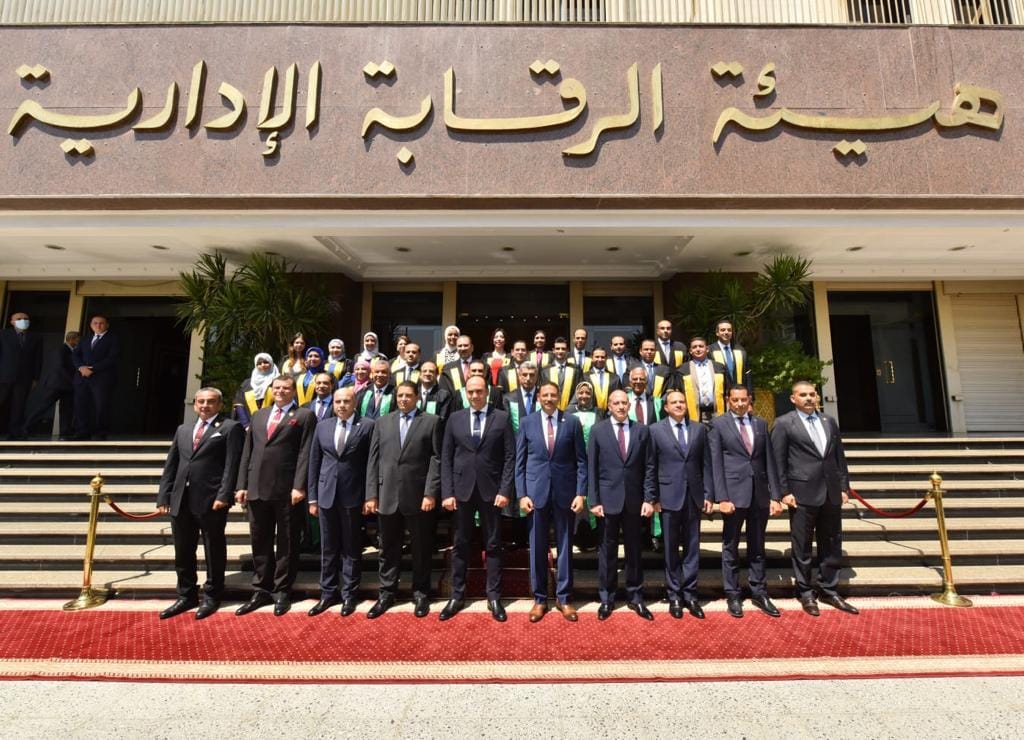
The Administrative Control Authority was also reactivated in 2013 in a far more assertive form. Previously a marginal anti-corruption body dating back to the Nasser era, it became a supervisory agency with its own detention facilities across Egypt’s twenty-seven governorates, and was headed by one of Sisi’s own sons. Citing statistics from an independent Cairo research center, el-Hamalawy notes that retired officers occupied at least a quarter of senior ministerial, gubernatorial, and deputy-gubernatorial positions between 2013 and 2020. These figures did not include officers serving on the boards of public-sector and state-owned enterprises. As I noted earlier, none of these numbers, taken individually, will surprise anyone who has followed Egypt’s political condition over the past decade. But their aggregation, coordination, and representation in a single place produces a concentrated image of what el-Hamalawy seeks to portray: a regime that has not merely seized control of civilian state institutions, but hollowed them out, attempting to wear them like an oversized galabeya draped over a fragile skeleton.
Any objective critic will notice, at several points in a book on which considerable effort has clearly been expended, a polemical tendency that advances arguments not fully warranted by the evidence alone, even if those arguments are usually constructed with considerable discipline. I found this somewhat unsatisfactory. El-Hamalawy makes no secret of his political identity: a Revolutionary Socialist since his university years, a participant in the 2011 Tahrir Square sit-in, a political activist in the years that followed, and a journalist awarded the Anna Politkovskaya journalism prize. His research interest in the security services was motivated by a desire to “study the enemy.” The result is a book whose political actors—liberals and Islamists alike—are generally drawn within clearly demarcated boundaries. He shows sympathy toward neither camp. Instead, he maintains a hard-edged neutrality in explaining the Muslim Brotherhood’s predicament under Mohamed Morsi: its uneasy suspension between the pressures of its rank-and-file base and the leadership’s rush toward political gains, seen as compensation for decades of persecution. Such an account is rarely encountered either among the Brotherhood’s most ardent admirers or among its most vehement opponents.
supporters of the regime are generally presented throughout the book either as victims of social repression or as opportunistic beneficiaries of regime patronage.
Yet supporters of the regime are generally presented throughout the book either as victims of social repression or as opportunistic beneficiaries of regime patronage. They constitute a large segment of the Egyptian public that prefers the regime’s stability to the chaos of the revolutionary years and Brotherhood rule. El-Hamalawy judges them as either victims or opportunists, rather than reassessing and studying their worldview with the same seriousness he devotes to reconstructing the career of a retired general.
Likewise, while el-Hamalawy devotes great attention to dismantling what he calls the “myths” of the military’s economic and political marginalization under Mubarak, he does not scrutinize his own central hypothesis with equal intensity: namely, that the unity of the coercive apparatus under Sisi is unprecedented in degree, rather than simply an upgraded and more efficient version of what preceded it. By the logic of the security system’s evolution since 1952, the present situation could equally be understood as the natural extension of the security state as it matured, rather than a radical break from it or the inauguration of a Second Republic.
El-Hamalawy may pile argument upon argument in favor of his hypothesis, but a skeptical reader can still ask whether the real transformation lies in the tools and means of implementation rather than in the nature of the regime itself. The system has accumulated seven decades of institutional experience, allowing it to refine its instruments of repression and the tactics of its security domination.
Like other serious scholars of contemporary authoritarianism, el-Hamalawy argues in the final part of his book that the regime he has spent dozens of pages analyzing is historically unprecedented in the scale of its domination and coercive capacity, despite its fragility and susceptibility to sudden collapse. This is a structural problem in this genre of scholarship. Yet el-Hamalawy’s conclusion is more candid than most comparable studies. He does not predict an imminent revolution. He acknowledges that the revolutionary activists of 2006–2014 have receded into the shadows, either retiring from politics or becoming victims of successive campaigns of repression, and that no organizational base now exists on which mass mobilization might rest. He points to the two brief protest waves against the regime in September 2019 and 2020, both easily dispersed because they lacked any organized leadership.
El-Hamalawy concludes his book with an account of the parliamentary elections held in November 2025, during which Sisi was compelled to annul the results in nineteen electoral constituencies after voices from within the security establishment itself objected to the coercive engineering of the electoral process by the National Security Agency. Through this final section, the author shows how parties aligned with the General Intelligence Service traded accusations with parties aligned with other security agencies. This could be read as the first evidence contradicting the very security unity to which the author has devoted the entire book. He writes here that such unity is no longer “cost-free.” It is a careful and qualified proposition, hedged with caveats, but it remains open to argument and refutation rather than amounting to mere wishful thinking.
Readers of an older generation will recognize something familiar in this line of reasoning: the attempt to trace cracks and contradictions within the institutions of an outwardly coherent regime in order to anticipate its eventual collapse. A previous generation of researchers and writers on Egypt made similar arguments under Mubarak before 2011, despite being unable to identify the causes, timing, or immediate trigger of the collapse when it eventually came. El-Hamalawy himself acknowledges that no one predicted the events of 2011, including his own political group, the Revolutionary Socialists. Yet he does not devote sufficient effort to interrogating the implications of this admission, settling instead for the reassuring and more optimistic formulation that “cracks in authoritarian security alliances rarely remain small.”
It should be noted that el-Hamalawy states at the beginning of the book that he does not seek to provide a “complete anatomy” of the Second Republic. Rather, he offers a history of the repression practiced by that republic. In doing so, he establishes clear limits for both the book and its ambitions. He engages only to a limited extent with the military’s economic institutions. Companies such as Safi, the bottled-water producer, or Wataniya fuel stations, are treated mainly as obstacles confronting Sisi in implementing the privatization program imposed by the International Monetary Fund. He does not undertake a full analysis of the military establishment’s economic networks as an autonomous economic system that competes with both public and private civilian institutions on monopolistic and unequal terms, distorting the construction, real-estate, agricultural-production, and logistics markets and threatening the middle classes.
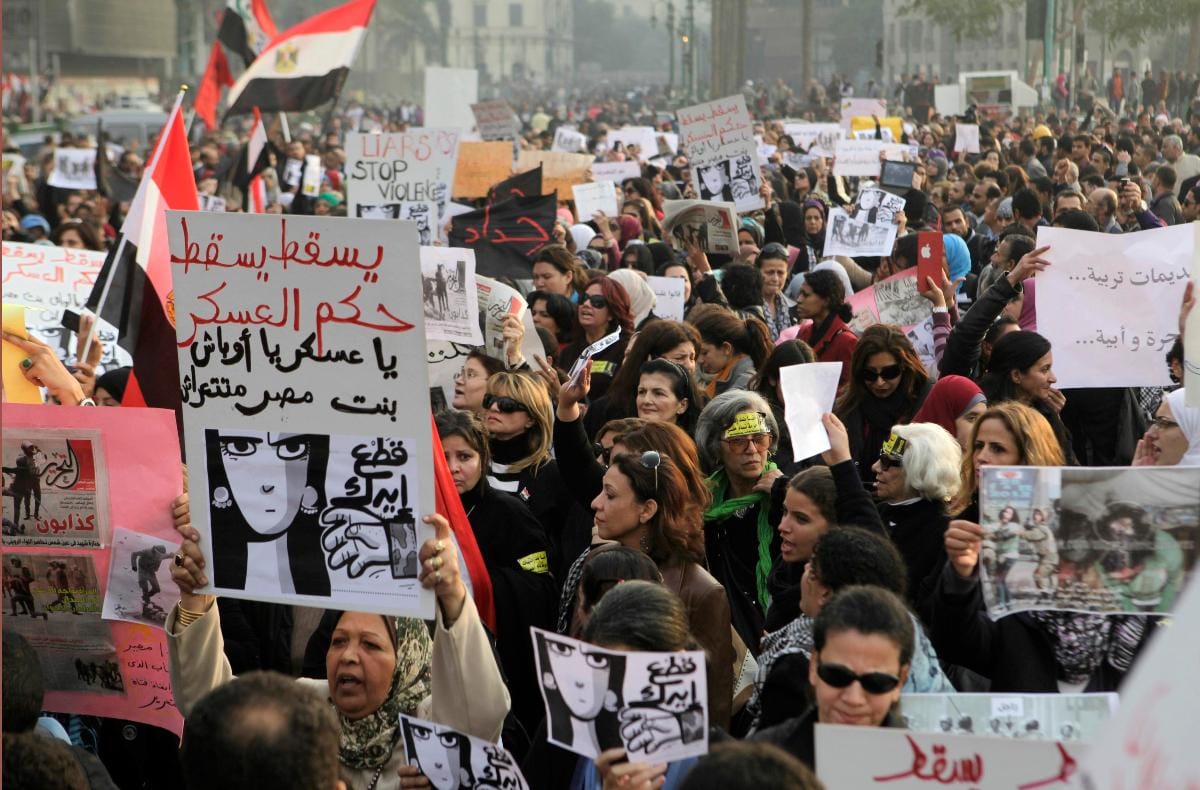
Gender is similarly absent as an analytical category, despite the bitter experiences of women inside detention facilities, women who are relatives of prisoners and the forcibly disappeared, and the young women on social media targeted in prosecutions under the banner of “Egyptian family values.” Given el-Hamalawy’s political formation, one can perhaps understand his relative lack of interest in explaining why so many ordinary Egyptians—who derive no direct benefit from the regime—continue to embrace its narrative of national salvation from Islamist polarization. He explains brilliantly how popular consent is no longer required by the regime; he is less convincing in explaining why a substantial segment of Egyptian society nevertheless continued to grant it that consent for a prolonged period after the coup. No single book can reasonably be expected to cover everything we might wish it to, however, and in that light these objections appear less fundamental.
In fact, Hossam el-Hamalawy’s book is a tightly constructed and particularly useful analytical narrative. It is a history of Egypt’s machinery of repression, told through the career trajectories of those who operated it. Through powerful arguments anchored in a documented chronology, it makes the case that 2013—not 2011—was the decisive rupture in the history of the modern Egyptian state: not merely a change in leadership, but a transformation in the structure of the system itself, from security institutions deliberately kept separate and fragmented, operating amid a cultivated climate of mutual suspicion, into a unified security establishment operating under a single leadership and cooperating through a coordinated hierarchy.
AP's report from the 1990s about terrorism in Egypt
Whether one accepts or rejects the individual components of the book’s argument, it succeeds in posing the right questions clearly at a time when much scholarship and commentary has offered little more than ambiguity and elastic terminology—phrases such as “authoritarian resilience” and “the deep state”—without identifying the mechanisms required for a coherent analysis.
Finally, for readers outside Egypt, I should add that one disturbing thread runs throughout the book: the persistent presence of Western and Israeli complicity. El-Hamalawy presents this as a foundational element in the structure of the security regime from its establishment in 1952 onward—first through assistance from the CIA, then later from Stasi and KGB officers; through technical and military support in the 1980s; through the militarization of the security forces under Zaki Badr’s counterterrorism model, which favored killing over arrest and trial; and down to the present, when the Egyptian Interior Ministry continues to send officers for training at FBI facilities in Quantico. Israel, meanwhile, did more than turn a blind eye to Egyptian arms deals with the West. It actively pressured Washington to maintain the flow of military aid to its peace partner, even as Egypt moved military equipment into parts of Sinai in violation of the peace agreement—a treaty that Hazem Kandil had portrayed as a source of resentment within the Egyptian military. At the same time, coordination took place with the Israeli Air Force to conduct strikes inside sovereign Egyptian territory, for the first time since the disengagement agreement.
El-Hamalawy accumulates these facts without excessive elaboration, but their cumulative effect is sufficient to reveal the fuller picture of a repressive system that has received consequential economic, military, and diplomatic support from Western governments since 2013—the same governments that periodically express concern over the human-rights violations the Egyptian regime commits on a daily basis. Unexpectedly, el-Hamalawy lays out the foundations of this case for the reader through documented evidence rather than inflated assertions that might otherwise strike an already skeptical reader as the conspiracy-minded rhetoric to which activists are sometimes prone.
In the end, the vividness el-Hamalawy brings to the book’s pages—through his descriptions of protest chants in the 1990s; the suffering of Central Security conscripts beaten, starved, and humiliated by their own officers, and the way they confessed this suffering to the demonstrators they had been sent to suppress; those almost magical moments of solidarity between Islamist and leftist detainees inside prison cells; and other human details that surface between the lines—lingers in the mind more powerfully than many of the book’s academic particulars. It gives the work a human credibility equal to its scholarly arguments, without replacing them.